
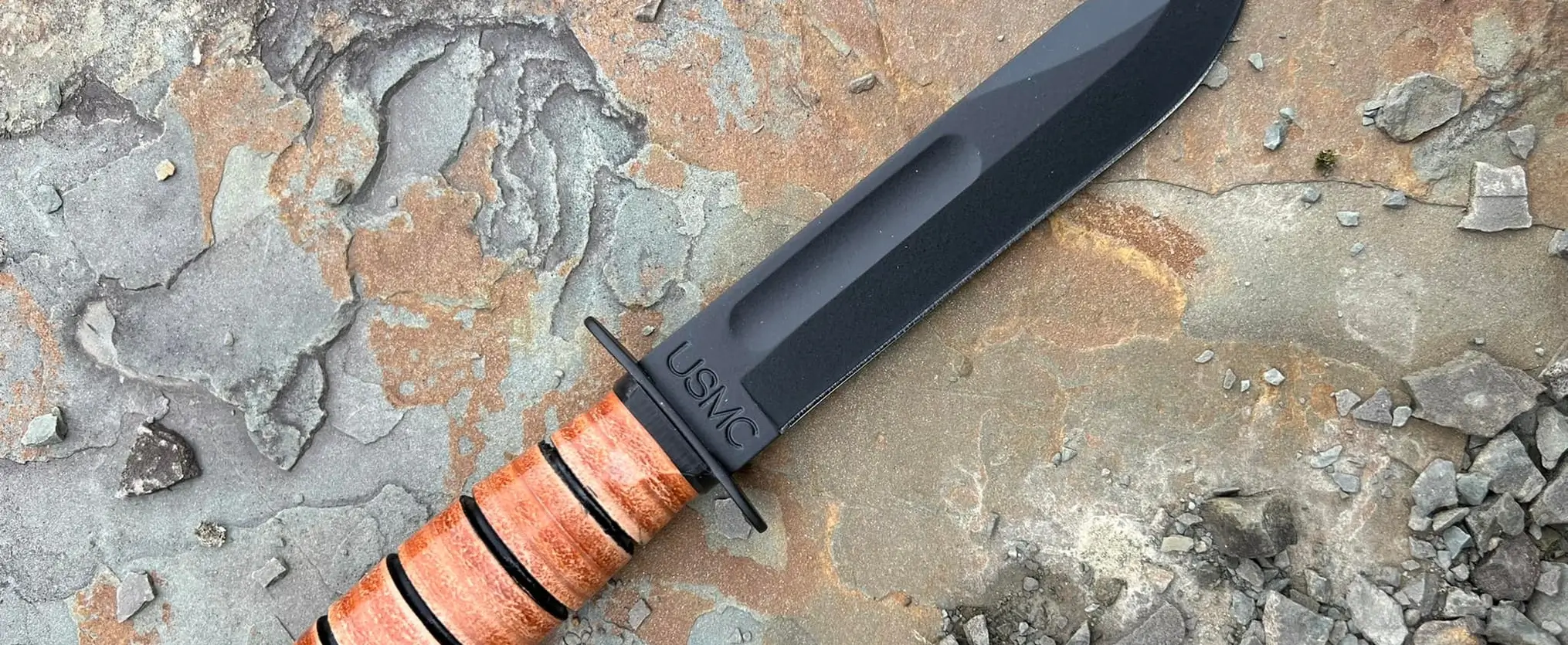
There are objects that carry more than function. They carry memory, identity, survival. Step into a workshop in Olean, New York, and you might feel the quiet weight of history hanging in the air. Rows of knives sit on benches, each one finished yet unfinished in its own way, holding stories of the hands that shaped them, the people who carried them, and the moments they were forced to answer. Among them, one name echoes louder than most: KA-BAR.

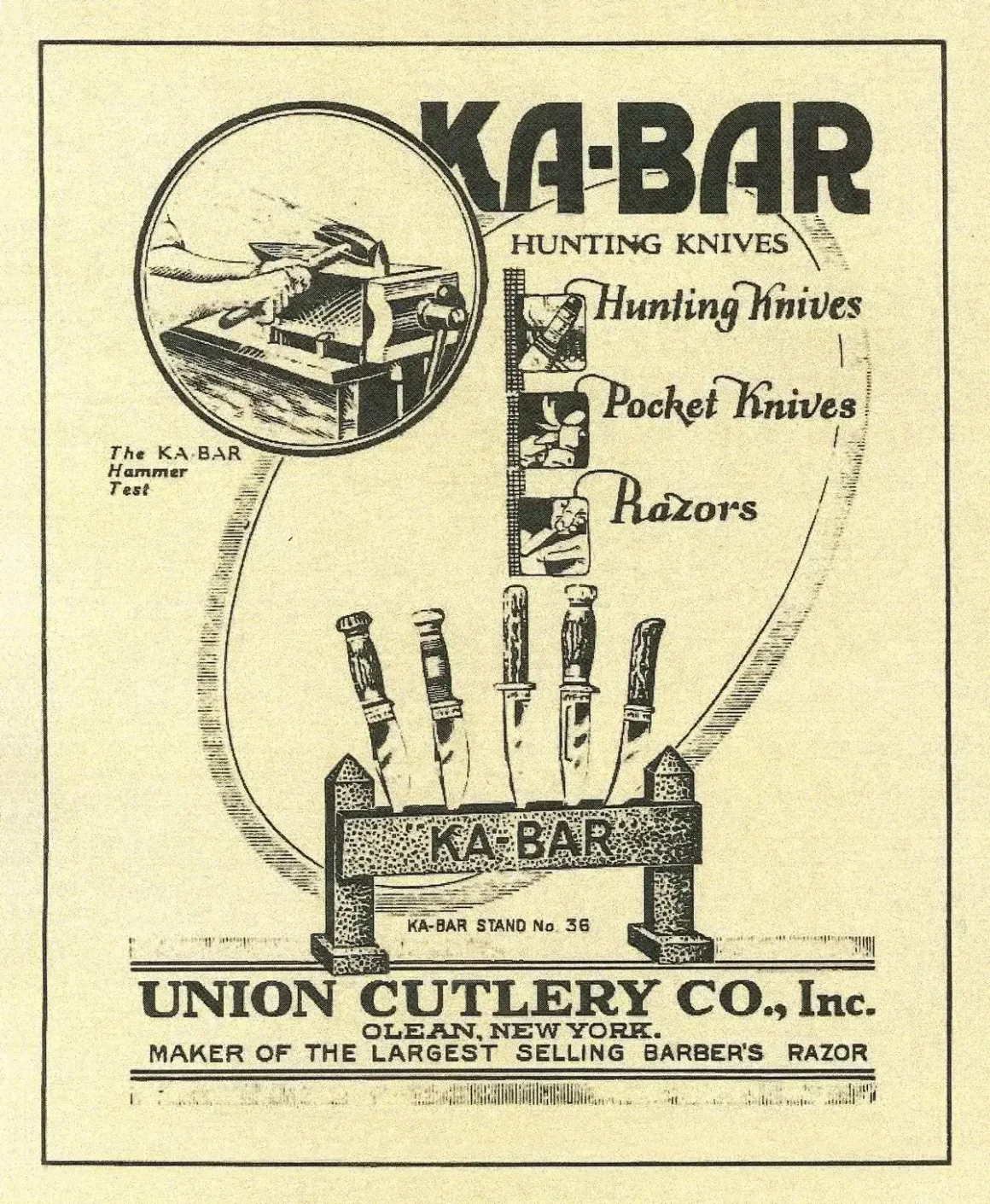
The name itself is rooted in a moment of desperation. In the early 20th century, a letter arrived at Union Cutlery describing an encounter between an Alaskan fur trapper and a charging Kodiak bear. The hunter fired his rifle, but the bear kept coming. When it closed the distance and began to maul him, he reached for his knife, a Union Cutlery fixed blade. With it, he killed the bear. The letter was barely legible, written phonetically, but one phrase stood out: “K A BAR.” Allegedly accompanied by the bear’s fur, the story struck a nerve. Union Cutlery adopted the line, refined it to KA-BAR, trademarked the name, and marked their blades with it. From the beginning, the knife was tied not to aesthetics, but to survival.
For many, that origin doesn’t live only in a blade. It lives in ink. KA-BAR tattoos exist as quiet markers of survival, service, and endurance, chosen not for decoration but for meaning. They reference moments when someone depended on a tool, a skill, or sheer resolve and came out the other side changed. Like the knife itself, the tattoo becomes a way of carrying that experience forward, long after the moment has passed.

That origin still shapes how KA-BAR approaches every design. The makers speak of ghosts inhabiting each piece, fragments of hunters, soldiers, outdoorsmen, and craftsmen woven into steel and leather. For 128 years, KA-BAR has built knives and tools for people who depend on them, from trappers and tradesmen to soldiers in some of the bloodiest battles of World War II’s Pacific Theater. The knives themselves mark moments in time, and the tattoos inspired by them have taken on a life of their own, honoring experiences, milestones, and service.

In the shop, traditional techniques sit alongside modern materials, but the philosophy remains unchanged. Every cut of Cro-Van steel, every burnish of leather, is intentional, shaped by decades of practice and observation. There is an artistry in this discipline that mirrors tattooing, the way a line, a shadow, or a texture can transform a tool into a personal mark. Some KA-BAR knives even show the passage of their own lives. Handles darkened by sweat, steel patinated by years of use. They are lived-in, intimate, and impermanent in the same way tattoos are, changing with every encounter.

Walk down any city street and people might struggle to describe a knife in ten seconds. But overlay those images, and what emerges is nearly iconic, a form as recognizable as a traditional tattoo motif. It is a reminder that artistry often lives within constraint, balancing function and expression, heritage and reinvention.

Perhaps that is the quiet power of a KA-BAR. Based in Olean, New York, one of the last strongholds of American manufacturing in the outdoor space, the brand endures by honoring where it came from while adapting to a changing world. Across its many blades, it holds memory. It reminds us that the objects we carry, like the tattoos we choose, are more than aesthetic. They are vessels of human experience. In a workshop where steel meets story, every scratch, every curve, every shadow of leather whispers of the people who stood behind it and the moments that demanded they hold fast.
When a KA-BAR ages in your hand, patinas in your life, it carries you forward. Survival is never just about holding a tool. It is about carrying meaning.
Leave a Reply