
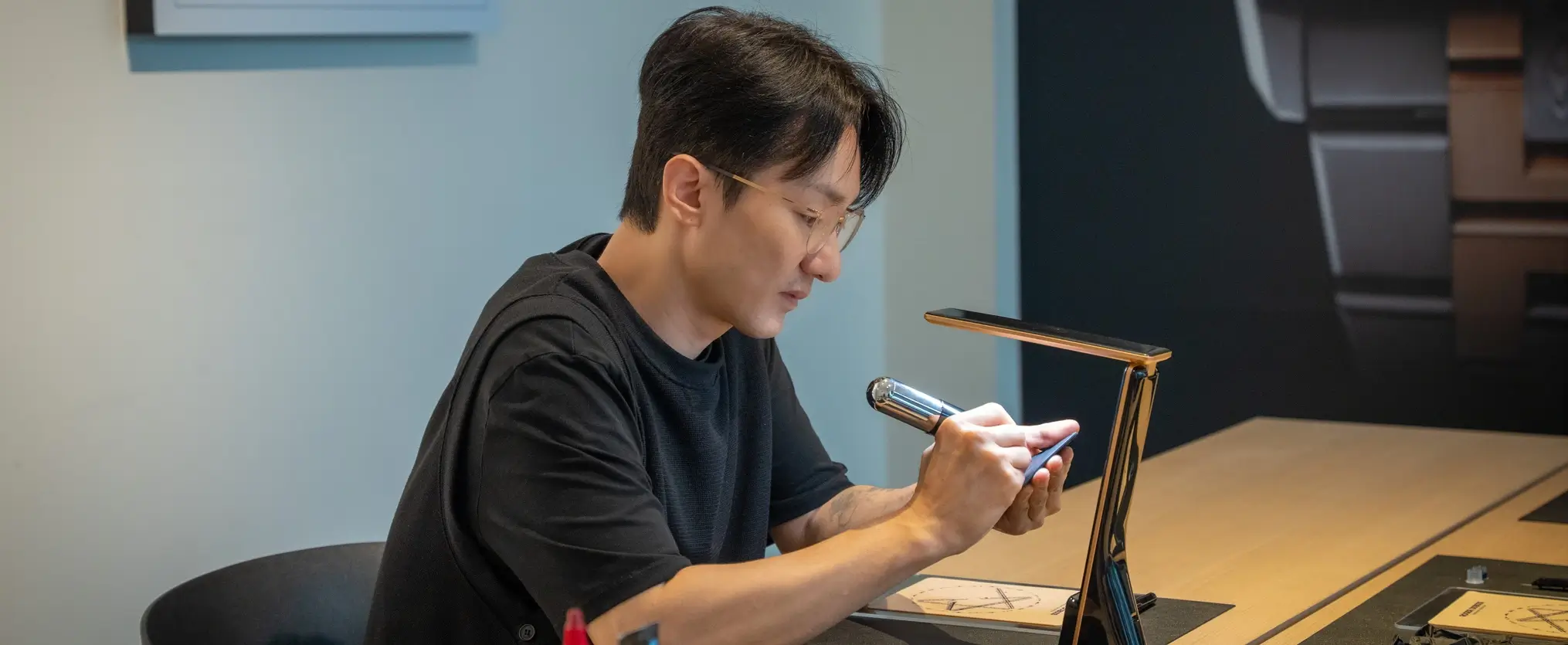
Most tattoos are judged by how they look in the moment they are finished. Bold imagery, sharp contrast, and immediate impact often take priority. This practice moves in a different direction.
One artist believes tattooing should be designed for time rather than trends. Tattoos are not treated as static images placed onto skin, but as living works that move, soften, and age alongside the body. Skin is understood as a material with memory, texture, and limits. Meaning is built through restraint and intention, not spectacle.
That philosophy defines the work of Yuseung Kim, an internationally active fine art tattoo artist who works under the artist name Dojun across Korea, Canada, and Hong Kong. Before tattooing, Kim studied textile and fashion design, disciplines that shaped how he understands the relationship between image and body. Fabric bends, stretches, and wears with time. Garments are designed to move and change. When permanence entered the conversation, tattooing became the most direct extension of that way of thinking.
Rather than treating skin as a background to be filled, Kim approaches tattooing as contemporary art with consequences. Every mark must coexist with the body and with time itself. Central to this approach is restraint. Images are edited carefully. Space is left intentionally. Nothing is added without purpose.
This is where Kim’s work diverges from the visual density often associated with microrealism. His lines are precise and his forms delicately constructed, yet areas of skin are deliberately left untouched. Empty space is not absence. It allows the tattoo to breathe, creating room for emotion and imagination to settle. Each open area is intentional, supporting longevity rather than immediate visual dominance.
That restraint is deeply influenced by Korean aesthetic philosophy, which values balance, natural flow, and imperfection over rigid symmetry or artificial perfection. In traditional Korean art, mastery is often concealed rather than displayed. Technique exists beneath the surface so feeling can emerge naturally. Kim applies this same principle to tattooing.
“I am more interested in concealing technique than displaying it,” he says.
The result is work that reveals itself gradually. At first glance, the tattoos may appear minimal. Over time, their structure becomes more apparent. Lines shift subtly with the skin. Forms soften rather than harden. Irregularity is embraced as part of the natural relationship between art and body. Empty space becomes a place where emotion rests rather than something that needs explanation.
Kim’s creative process reflects this same patience. Consultations begin with listening rather than sketching. He asks clients what moments, emotions, or memories they want to carry forward. Tattoos are not treated as isolated images, but as records meant to live alongside a person through time.
“A tattoo is not an image that stays on a canvas,” Kim explains. “It lives with a person, ages with them, and carries their memories and emotions through time.”
Nature frequently provides the visual language. Birds, animals, and flowers appear not as decoration, but as reflections of impermanence, resilience, and renewal. These forms carry warmth and emotional stability, qualities Kim believes are essential in a medium that remains on the body for a lifetime. The space surrounding them becomes part of the narrative itself.
Every technical choice supports this philosophy. Lightweight, stable machines allow long sessions without sacrificing control. Fine needles provide precision while supporting clean healing. Black and grey inks are chosen for how they settle and age. Color, when used, remains subtle and tonal. Nothing is meant to distract from how the tattoo lives on the skin over time.
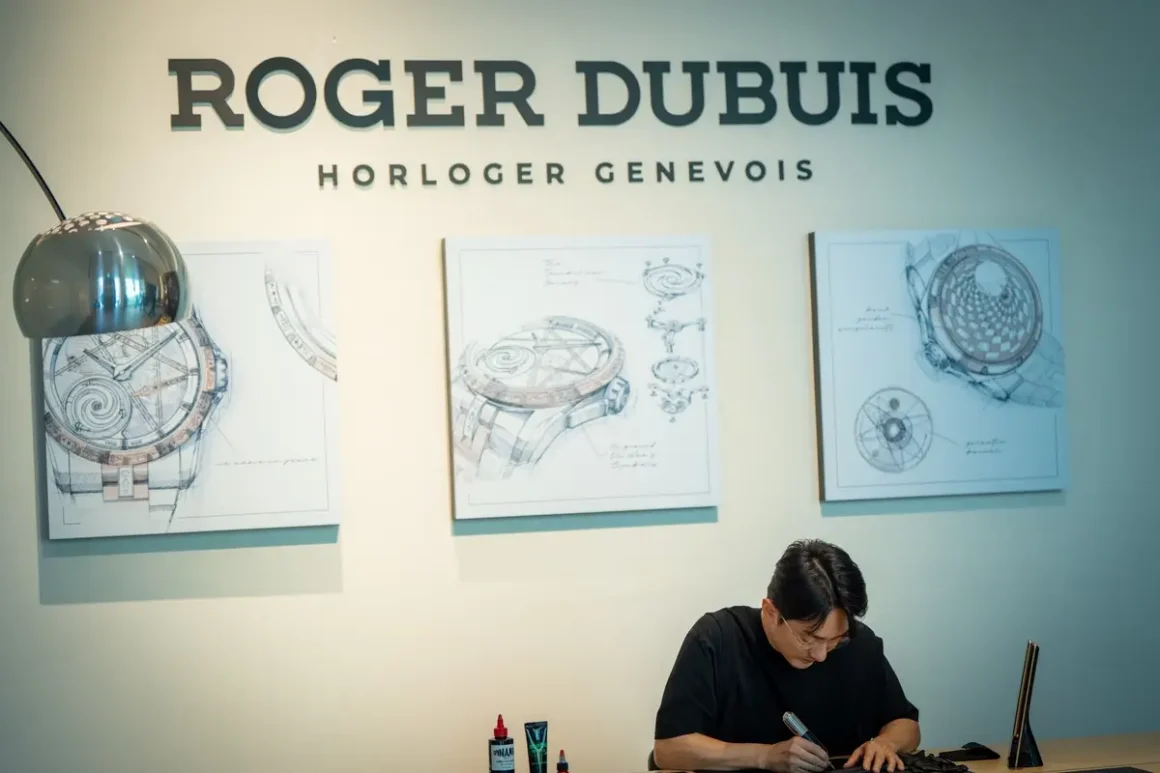
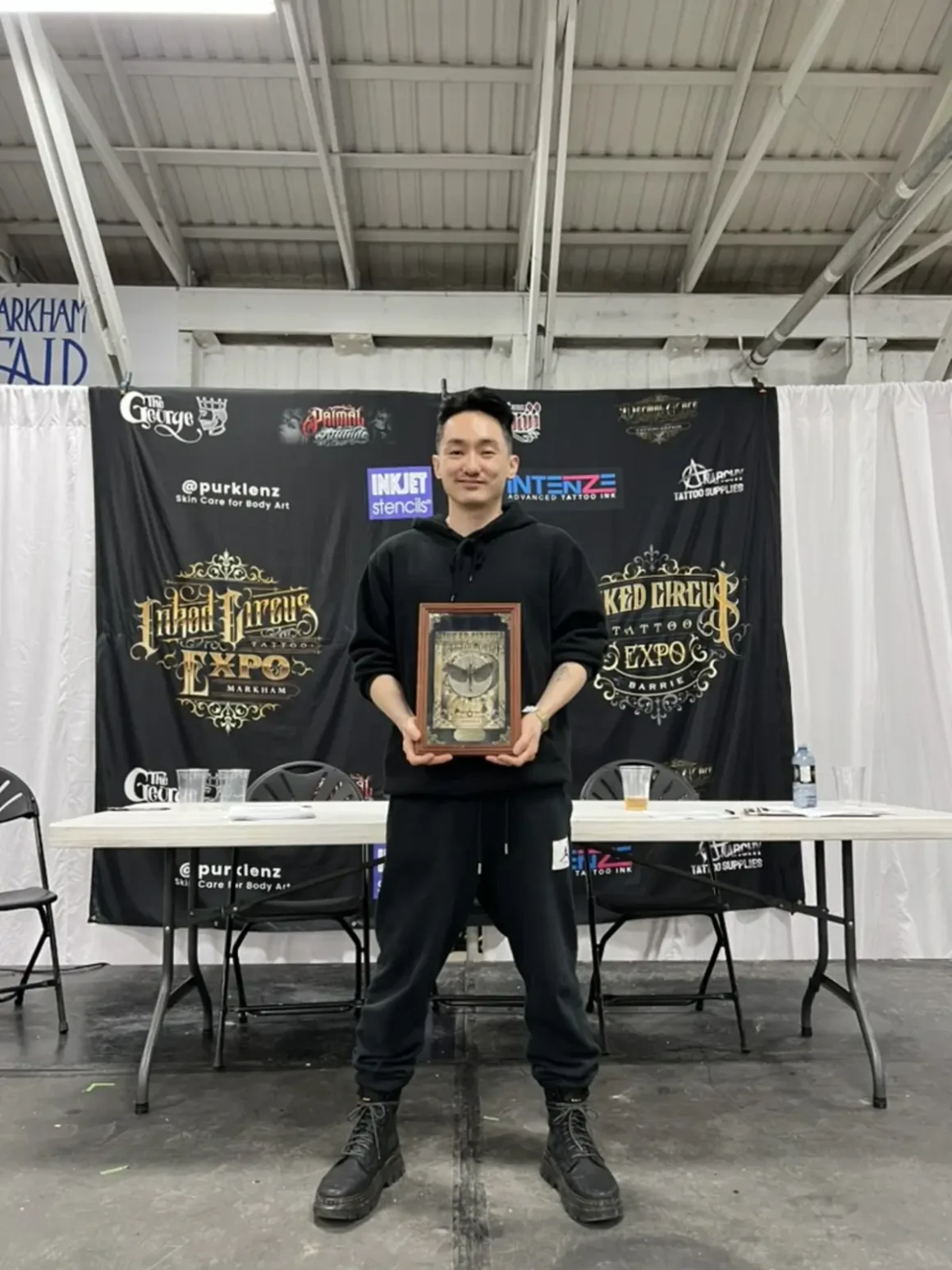
This approach has shaped an international practice recognized beyond the studio. Kim has received an award at the Inked Circus Tattoo Expo and has exhibited at Gallery Shilla, where tattooing is placed in dialogue with contemporary art. Collaborations with Roger Dubuis and Jordan Seoul have further challenged him to apply the same principles across different contexts while maintaining focus on longevity and restraint.
Dojun’s work stands out for its quiet confidence and conceptual depth, positioning him among a new generation of tattoo artists whose practices move fluidly between studio, gallery, and contemporary art contexts.
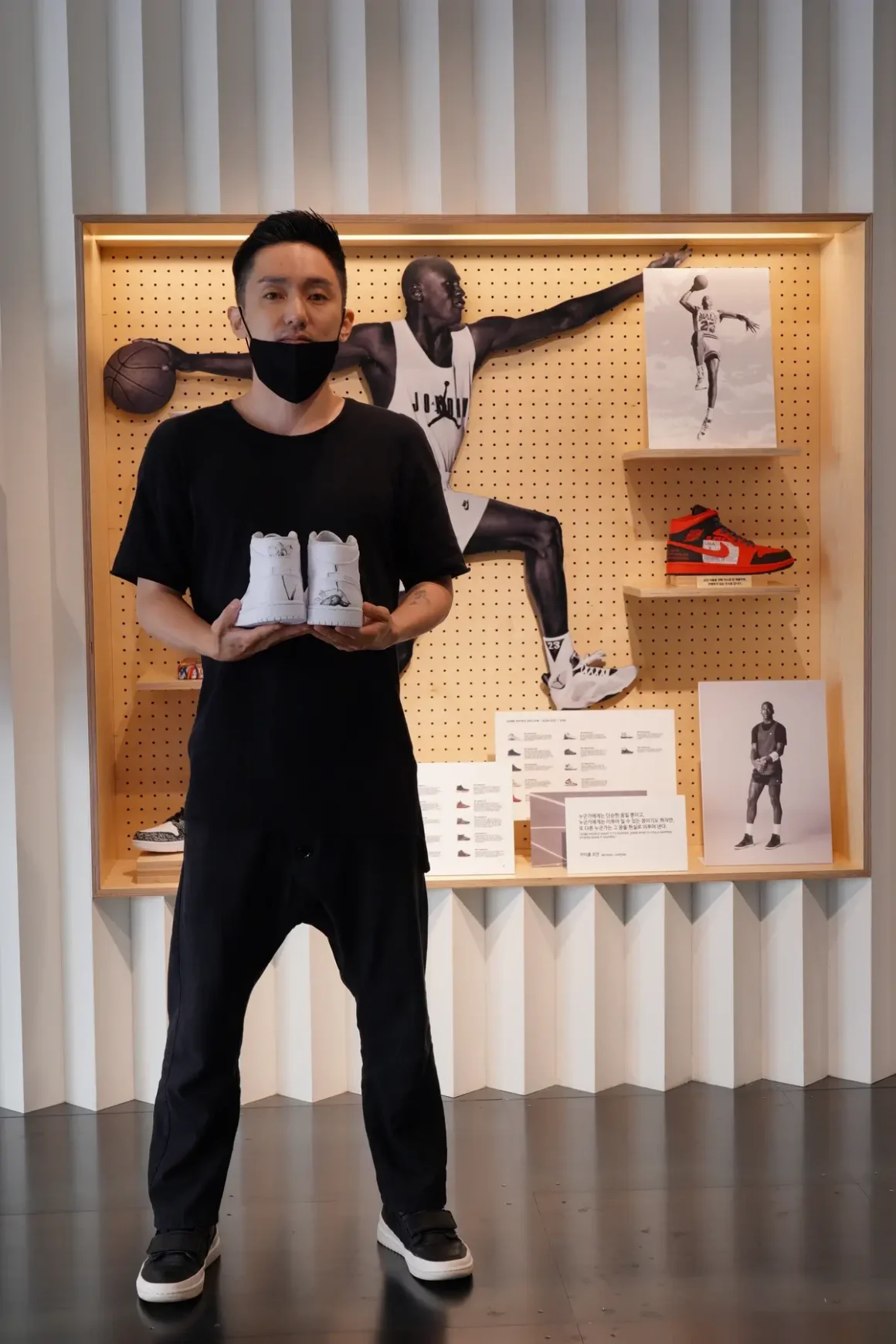
Kim sees tattoo culture entering a more reflective phase. Trend driven designs are giving way to work rooted in personal story and lived experience. Tattoos are increasingly understood as emotional records rather than surface decoration. In this shift, restraint becomes strength, and designing for time becomes essential.
For Dojun, tattoos are not meant to dominate the body or demand attention. They are meant to live quietly alongside the wearer. To soften with time. To remain personal. To hold memory without spectacle. Tattoos designed not for the moment they are finished, but for the years that follow.
Leave a Reply